
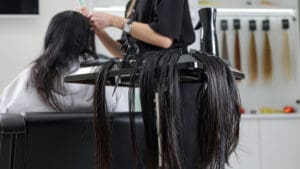
If you are thinking of recommending daily extensions to your clients, or, as a hair extension lover, you’re prone to wearing clip-ins every single day, then, it may be time to reconsider.
Despite clip-in hair extensions being incredibly practical, adaptable, and classic, particularly for everyday styling, there’s still risks involved. Here in this blog, we’ll be guiding you through the best way to integrate clip in extensions into your weekly routine in a way that’s stylish, practical, and safe for your natural locks. Also, you can explore all of the key ways to wear your clip-ins in more depth in the cliphair guide for how your clip-in extensions can affect your hair, plus all the ways you can maintain healthy hair.
The Short Answer
Clip-ins can be your everyday extensions if you have thick or medium-volume hair. For most hair types, daily use is safe when used with the proper application, removal, and maintenance, but in general, it is not advised. Consider experts’ tips to maintain the best possible condition for both your natural hair and extensions. You can also consider permanent hair extensions, such as tape-ins or nano rings, for a simple everyday option that doesn’t require extensive application. You can save time on your hair routine with these options and can avoid wear and tear to both your natural hair and extensions.
Benefits of Daily Wear
Wearing extensions daily can transform your look and style in a matter of minutes. Primarily, people adore clip-ins because they deliver volume and length instantly, without waiting for trips to the salon. Secondly, you can try different hairstyles every day, including straight, curly, long, or mid-length styles. Lastly, they are popular for being user-friendly, beginner-friendly, and needing no specialised tool or expertise. They can be worn easily and smartly without spending hours in a salon chair. Clip-ins also let you take breaks whenever you want, unlike permanent extensions. Overnight, your hair has downtime.
Potential Concern
To avoid extension damage, we recommend that you follow some essential rules. Firstly, avoid straining your roots by putting clips in the same place; you can change the locations a few times a week and reduce the number of clips to relieve your scalp from stress. Secondly, your extensions need to be washed frequently if you spray or apply serums; however, excessive washing also damages them. Therefore, proper care is necessary to improve their lifespan. Finally, your extension will take up to 10 minutes a day for proper placement, especially if you are a beginner. Time is not usually a concern when it comes to clip-ins.
Best Practices for Daily Wear
If you or your clients are committed to daily wear, adapt the following practices for safe extension wear.
Keep changing your clip position on your scalp to avoid strain on your hair follicles.
Overnight wear is not expert-recommended as it may cause damage from tugging and friction.
Remove your extension for a day or two per week to ensure natural regeneration. This also reduces tension on your follicles and ultimately prevents damage.
Straightening conditioners and nourishing shampoos are a must as they help in improving your hair health.
Signs You Need a Break
Always remember that your natural hair needs to break. Even with permanent extensions, your scalp still needs an extension break. Consider one to two months’ breaks every 12 months before going for the next set. The extension break will heal, regenerate, build, and strengthen your natural hair. After all, you need to prepare carefully for the next set of installations. Pay proper attention to your scalp health and consider deep conditioning, hair treatments, and light styling during that break. Do not wait too long to seek expert advice when discomfort or breakage occurs.
Making Extensions Last
Clip-ins are cost-effective and can last long if properly cared for. Follow simple techniques for the best extension care to prolong their lifespan.
Regular brushing to avoid tangles
Washing gently with cold water, but not too often
Storing them carefully to prevent damage
Your extensions deserve the same care as your natural hair. Treat them well!
Conclusion
So even if you are your own stylist for your clip-in extensions or have a large salon clientele, understanding sustainability will help ensure the longevity of your extensions. Safe hair procedures will include preparation, installation, cleaning, storage, and maintenance, which are key to better outcomes. And finally, your hair follicles and scalp need rest to regenerate before the next set of placements.
Read more:
Can You Wear Clip-In Extensions Daily? The Truth