Thomas A. Berry, Dan Greenberg, and Kimberly Coleman
Veronica Herrera-Lucha supported four family members by working for Mi Vecino, Inc., a Florida voter registration organization. But in 2023, Florida made her employment illegal.
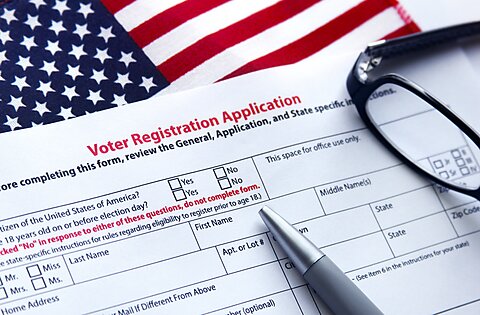
The state enacted Senate Bill 7050, which prohibits noncitizens from “collecting or handling voter registration applications.” The fine for non-compliance is steep; if a noncitizen collects or handles a voter registration application on behalf of a voter registration organization, the organization is fined $50,000 for each noncitizen. For the many noncitizens like Ms. Herrera-Lucha who used to engage in such work, the law has prohibited their continued employment at voter registration organizations and threatened their livelihood.
Several voter registration organizations challenged Senate Bill 7050’s prohibition and penalty in federal court, alleging discrimination based on alienage (that is, the status of being a noncitizen) in violation of the Fourteenth Amendment’s Equal Protection Clause. The district court agreed, finding that Senate Bill 7050 violates the Fourteenth Amendment. Now the state has appealed to the Eleventh Circuit, and Cato has filed an amicus brief in support of the law’s challengers.
Our brief argues that the federal government has the exclusive power to determine the rights of noncitizens in this area of the law, not state governments. Because the federal government has expressly permitted certain categories of noncitizens to work, Florida’s law has been federally preempted and is therefore invalid.
Furthermore, the justifications offered for Senate Bill 7050’s labor ban cannot justify its discriminatory treatment. According to the law’s backers, Senate Bill 7050 aims to “protect the voter” by preventing noncitizens from handling registration forms. But citizenship status is unrelated to the responsible handling of a form. In fact, the record offers no evidence that noncitizens are more likely to mishandle voter registration applications than citizens.
Florida’s law accomplishes little besides imposing costs and burdens on voter registration organizations, and the Eleventh Circuit should affirm that the law is unconstitutional.