Dominik Lett
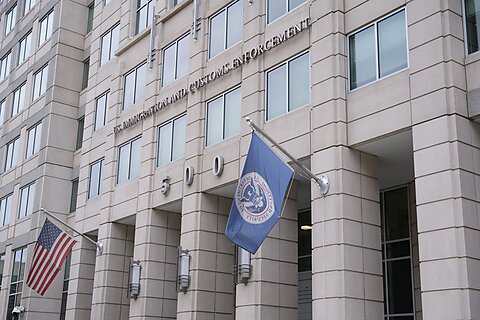
On February 2, Congress approved full-year appropriations for nearly every major federal agency, except the Department of Homeland Security (DHS), which is temporarily funded until February 13. Following the tragic shootings of Alex Pretti and Renée Good, Democrats have threatened to block full-year funding for the DHS unless Republicans agree to restrictions on Immigration and Customs Enforcement (ICE) and Customs and Border Protection (CBP). Whether the DHS is shut down or not, ICE and CBP will still be able to pursue their immigration crackdown largely undisrupted due to the One Big Beautiful Bill Act (OBBBA).
The standoff highlights a more insidious trend in how Congress abdicates its responsibility to judiciously manage spending and taxation. By shifting immigration enforcement and defense spending outside the normal appropriations process, Republicans have short-circuited the system of checks and balances that restrain the growth and abuse of government power. The long-term result will be less oversight, weaker constraints on fiscal irresponsibility, and greater partisanship.
OBBBA Changed the Ballgame
Traditionally, defense, immigration, and border control agencies are funded through discretionary appropriations—an annual process in which Congress is supposed to reassess and adjust overall funding levels for roughly one-fourth of all government spending. Because Congress must affirmatively approve this category of spending every year, the appropriations process forces legislators to compromise.
Republicans changed the usual calculus last year when they passed the OBBBA on a party-line basis, which provided roughly $300 billion in new defense and immigration-related budget authority on top of the discretionary budget. Under the OBBBA, ICE received roughly $75 billion in new budget authority—seven times ICE’s typical annual budget of $10 billion. These funds remain available to the current administration whether Congress passes an annual budget or not.
Abdication of Congressional Oversight
Mandatory or direct spending—like what is included in the OBBBA—constitutes the majority of all federal government spending. This type of spending is not reviewed annually and primarily consists of entitlement programs like Social Security and Medicare. Over the decades, direct spending has made up a larger share of the overall budget, while the share of discretionary spending has shrunk (see the graph below). Importantly, the entirety of the long-term federal budget challenge is traceable to the growth of direct spending, particularly old-age retirement and health programs.
When an agency is funded via the appropriations process, Congress has an annual opportunity to reevaluate performance, scrutinize mistakes, and adjust funding accordingly. Provided there are political or fiscal constraints, agencies are also competing for funding with each other, as legislators assess which programs are the best use of taxpayer funds. In addition, the appropriations process gives Congress an annual opportunity to flex its power of the purse and check executive branch misbehavior.
Because of the OBBBA, ICE and CBP no longer need annual Congressional budget approval. Funds are already available, with significant multi-year flexibility. The shutdown last fall made it clear that the administration can continue and expand ICE and CBP operations, all without the approval of Congressional appropriators.
The Minority Party Becomes Weaker
If Democrats reject the DHS funding bill and there is another partial government shutdown, ICE and CBP aren’t likely to face a significant funding constraint. They already have excess budget authority available from the OBBBA. In addition, many of their employees are deemed “essential,” meaning they can continue to operate in the event of a government shutdown. The same applies to many other DHS agencies, such as the Coast Guard and the Transportation Security Administration (TSA).
Nevertheless, the Coast Guard, TSA, Federal Emergency Management Agency (FEMA), and other DHS agencies appear more likely to be affected by another shutdown than ICE and CBP. That is because OBBBA’s immigration-related spending is primarily earmarked for ICE and CBP, rather than a blank check for the entire DHS.
The fundamental problem here is that both Democrats and Republicans have tacitly agreed that budget reconciliation—a special process to bypass the Senate filibuster that only requires a simple majority—should be used to fund partisan policy priorities and expand the deficit.
During and after the pandemic, Democrats used the process to pass the American Rescue Plan and Inflation Reduction Act, which included stimulus checks and green energy subsidies. Republicans used the process to pass the OBBBA, which included tax cuts, health care reforms, and defense and immigration-related spending increases. Both parties are guilty of using this procedural workaround to bypass the compromise-driven process inherent with normal appropriations.
Now that Republicans have chosen to fund ICE and CBP through reconciliation, what stops a future Democratic Congress from using reconciliation to double the Department of Education’s budget or quadruple Environmental Protection Agency (EPA) funding?
Expect future Congresses to similarly abuse this process to supplement appropriations, bypass tradeoffs, and undermine Congressional oversight.
Norm Erosion
Congressional passage of the OBBBA and the reconciliation laws that preceded it are themselves a reflection of greater partisanship and weakened institutional constraints on spending. Thanks to reconciliation, the minority party wields less influence in shaping funding flows and extracting concessions. The majority party has less incentive to collaborate with the minority party and manage spending and taxation responsibly. Over the long run, this will likely result in worse fiscal outcomes and the erosion of checks and balances.
The decline of sound budgeting principles need not be inevitable. For about a decade (2007 to 2017), Congress constrained reconciliation by adhering to the Conrad Rule, a requirement that reconciliation cannot add to deficits. Restoring the Conrad Rule would limit the incentive to abuse this fast-track process. Better yet, Congress could adopt a “super” Conrad Rule: for every dollar in deficit expansion included in reconciliation, lawmakers must include two dollars in deficit reduction.
It’s worth noting that Congress has also used controversial budget gimmicks to hide the true cost of past bills and bypass the rules that constrain reconciliation. For the OBBBA, Republicans claimed that some provisions, like the extension of certain expiring components of the Tax Cuts and Jobs Act, should be scored as having zero fiscal effect. The rest of the OBBBA’s provisions were scored in a more traditional manner because it minimized the final price tag.
Congress ought to mandate that any reconciliation bill should be strictly scored under either a current law baseline (temporary provisions expire as scheduled) or a current policy baseline (temporary provisions are scored as being permanent). Consistently adopting either baseline is preferable to the custom baseline gimmickry used for the OBBBA.
Of course, Congress could still use reconciliation as a runaround to normal appropriations if the Conrad rule were restored and the baseline gimmick were resolved, but it would be more politically challenging to do so, and the final outcome would at least be deficit neutral.
Conclusion
The latest shutdown threat is part of a larger trend of both parties embracing reconciliation as a shortcut to bypass institutional constraints on new deficit spending. This comes at a cost: diminished fiscal responsibility and a government less constrained by traditional checks and balances. Until lawmakers recommit to traditional procedural guardrails, we should expect the appropriations process to become weaker as an oversight mechanism and deficits to grow ever larger.